Design Systems Are Not About Industry. They’re About Failure Prevention.
Your team doesn't need a “better UI.” You need to stop your product from breaking as it grows. Not visually—structurally.
The real problem is always the same:
When products scale, three things break:
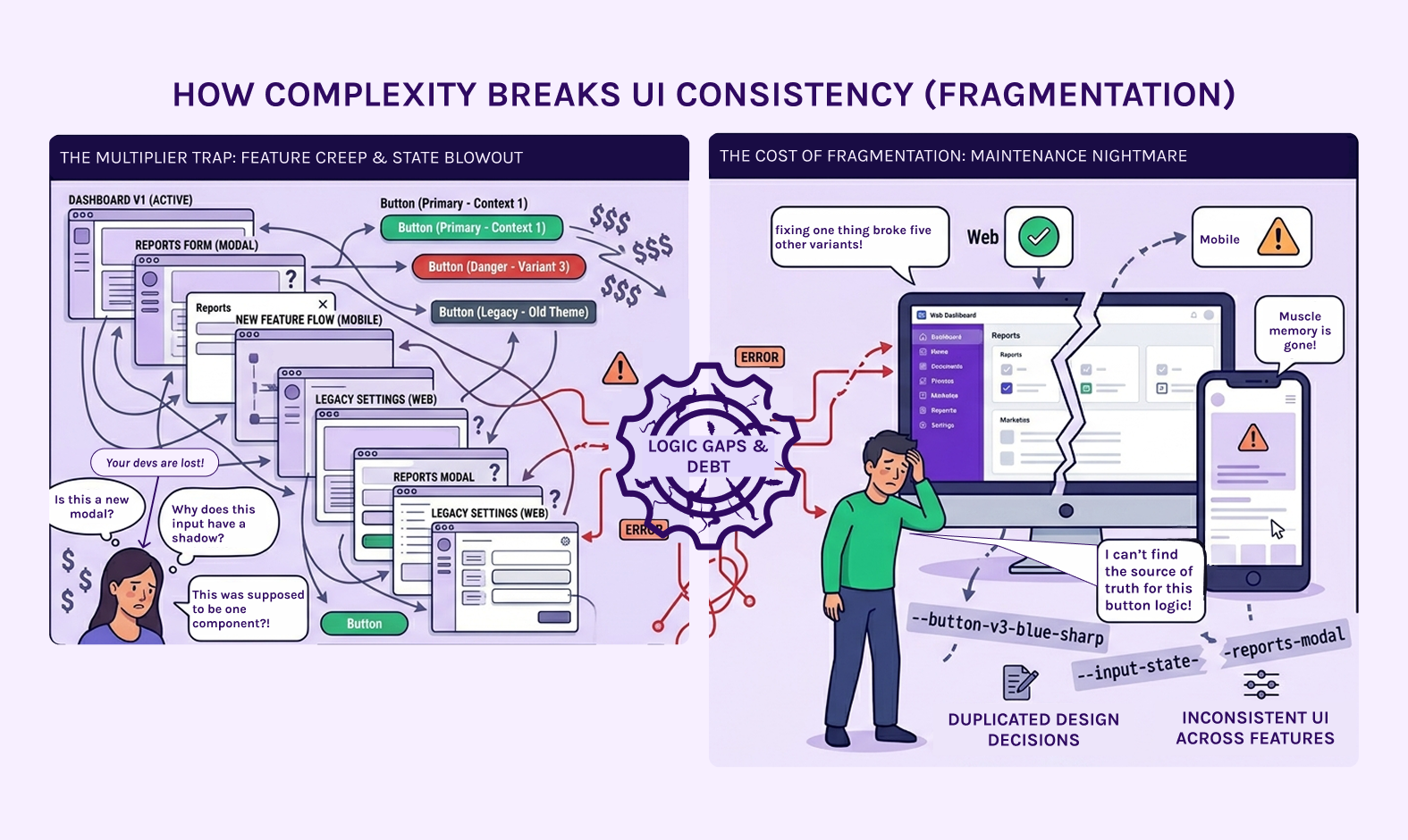
Complexity breaks UI consistency
New features add multiply states. Buttons, inputs, dashboards, and flows start behaving differently depending on context. What used to be one component becomes ten uncontrolled variations.
The result:
- inconsistent UI across features
- duplicated design decisions
- unpredictable interface behavior
Scale breaks decision control
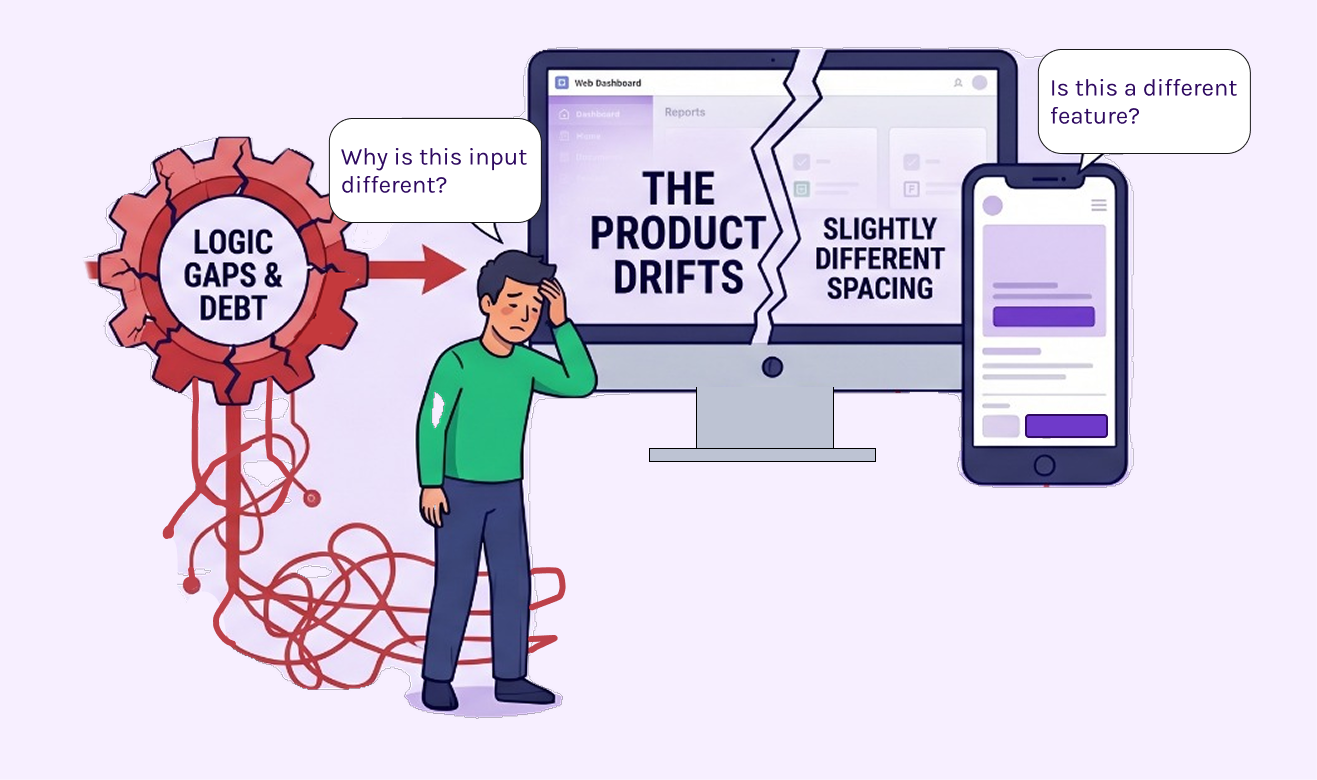
As more designers and engineers join, decisions stop being centralized.
What was once “the system” becomes:
- personal interpretations of components
- slightly different spacing rules
- inconsistent implementation habits
The product doesn’t change intentionally. It drifts.
Multi-platform breaks translation
Web, iOS, and Android stop matching. Not because teams don’t care—but because there is no shared structural language.
So every change becomes:
- repeated manually across platforms
- inconsistently interpreted
- slowly diverging over time
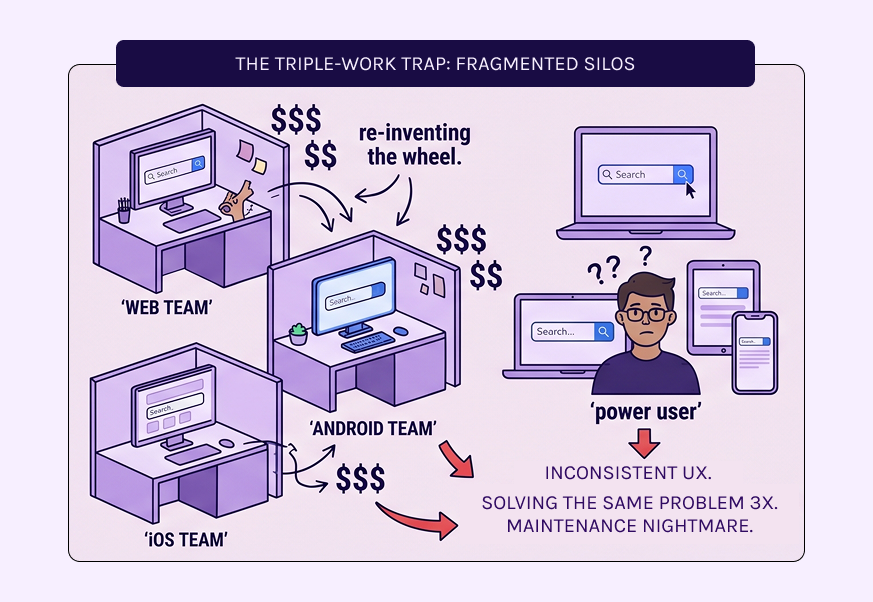
The result is always the same:
A product that looks consistent at the start… but becomes harder to maintain with every release.
This is where design systems actually matter.
Not as UI libraries. But as constraint systems that prevent structural decay.
Our work focuses on one thing
Building systems that remain stable under:
- increasing complexity
- growing team scale
- multi-platform execution
Because the industry doesn’t matter
A fintech dashboard, a SaaS communication tool, or a health workflow system all fail in the same way:
Their interface logic stops being centralized.
What we build instead:
A system where:
- design decisions are defined once
- components inherit logic instead of duplicating it
- updates propagate globally instead of manually
- web, iOS, and Android stay structurally aligned
The outcome is simple:
If your product is starting to feel inconsistent as it scales, we can help you map where the system is breaking.
Define Your Scope Design System Intake >> (form)